Jul 31, 2026
Is the Most Hated Stock Market in the World Worth a Look?
The best investors in history had this in common: They fished in ponds that other investors refused to touch.
Sometimes, that was the entire U.S. stock market, like during the Great Depression, when Sir John Templeton bought 100 shares of every U.S. company trading for under a dollar.
Warren Buffett famously loaded up on distressed financial institutions in the 2008 financial crisis. Peter Lynch invested in a near-bankrupt Chrysler in the early 1980s.
If you read financial news, you know the Chinese stock market pond doesn’t smell good now.
Like a partner who keeps returning to an abusive relationship, American investors have gotten bloodied by Chinese stocks again and again.
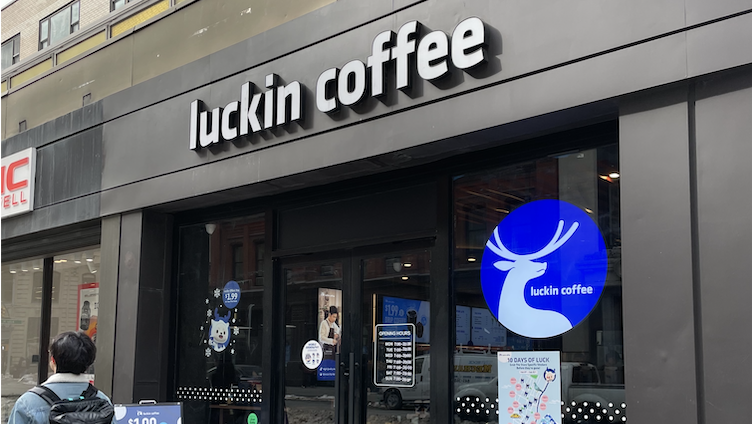
American enthusiasm enabled the reverse-merger frauds around 2010 – none of which were meaningfully punished in China. Trusting Western investors bought Luckin Coffee hook, line, and sinker – only to get dragged to the bottom when Luckin was exposed as an accounting fraud.
Even today, American retail money is enabling more than a hundred Chinese microcaps trading on the Nasdaq. Many of their independent auditors have explicitly flagged both "going concern" risks and material financial reporting deficiencies – auditor euphemisms for: "We think this company is a scam and about to run out of cash". Ironically, these companies would not be allowed to list on domestic mainland exchanges.
Perhaps too slowly, Americans are wisening up. The total market cap of Chinese stocks trading in the U.S. currently sits near $1.1 trillion, down from over $2.3 trillion just three years ago.
Why investors fear China
Fraud risk aside, American investors have a long list of other reasons, both economic and ideological, to avoid Chinese stocks:
- Blurred lines between State and private sector: Not a fan of China’s communist government, but want to support Chinese companies? Too bad: It’s a package deal. Article 32 of the CCP’s constitution requires any company with three or more Party members (and with 100 million Party members in China, it’s easy to have three together) to have a Party “cell” that monitors and ensures compliance. Plus, China’s 2017 National Intelligence Law requires companies to share any information the government wants, without telling anyone.
- “Bad guy” alliances: In fairness, China’s global approval rating is now higher than America’s – something that would have seemed impossible several years ago – but from a Western perspective, China is in bed with global bad guys. China refuses to join the US, UK, and EU in sanctioning Iran, and keeps buying its oil. Xi Jinping maintains a "no limits" alliance with Vladimir Putin (which has limits), and China helps both Iran and North Korea defy international sanctions.
- Poor human rights: This is more ethical than economic, but the Chinese Communist Party’s insistence on absolute power at the expense of human rights tends to rub residents of non-authoritarian regimes the wrong way.
- A government that’s above the law: While China’s constitution references democratic processes, Xi’s authority comes from being General Secretary of the CCP. This would be a bit like the Republican or Democratic party unilaterally running the U.S. government – i.e., the government is underneath a political party. Courts are biased and laws are written vaguely to ensure the Party, rather than the letter of the law, ultimately governs.
- A shrinking, aging population
- Intellectual property theft and unfair trade practices
- War or sanctions if China invades Taiwan
- A property bubble: Property historically accounted for roughly 25% to 30% of China’s GDP. But that bubble has been slowly bursting..
- Capricious regulation: Entire industries, like private after-school tutoring, can be wiped out overnight.
- Casino-like markets: Chinese investors trade more frequently than any other country’s (India is #2). China’s domestic stock market is retail-heavy, and prone to volatility, insider trading, and speculation.
But are things improving for investors?
Let’s pull on that last string.
A recent study by researchers at Peking University and the Shanghai Stock Exchange analyzing retail vs. fundamental traders showed that fundamental-driven investors not only now make up a growing share of the domestic market (52% of active trading volume), but they also generate the highest risk-adjusted returns.
Furthermore, unless you are buying a KraneShares ETF that deliberately holds mainland "A-shares" (which are hard for foreigners to buy directly; hence the usefulness of these ETFs), as an American buying Chinese equities, you are actually purchasing American Depositary Shares (ADSes) – U.S.-traded “credits” set up by investment banks that represent interests in foreign-listed stocks. That means your holdings trade on the NYSE or Nasdaq, are audited by auditors the US Public Company Accounting Oversight Board (the PCAOB) inspects, and comply with SEC disclosure regulations. Chinese business in American wrappers, basically.
Luckin Coffee redeemed itself
Remember Luckin Coffee? The company that committed accounting fraud, was delisted from the Nasdaq, and left investors holding the bag in 2020?
Luckin paid its SEC fines, ousted founding executives, restructured its debt, brought in professional private equity backing (Centurium Capital), and semi-rebuilt its business model. By focusing on lower-cost beverage innovations, Luckin returned to profitability, and now trades on the U.S. OTC market with a multi-billion-dollar market cap.
Luckin’s stock price has gone from just over $1 at its post-scandal lows to nearly $33 today.
The bull case
1. China is cheap
The Buffett Indicator – Market Cap ÷ GDP, and a measure that Warren Buffett described as “probably the single best indicator” of market valuation – makes China look very affordable relative to the U.S.:
- United States: Roughly 230%, which is above the peak of the dot-com bubble.
- China: 80%.
2. Chinese save a lot
China has one of the highest domestic savings rates in the world, at around 40% of disposable income.
For American’s? 3%.
Just 5% of Chinese household wealth is currently in stocks (relative to 1/3 of American household wealth and nearly 50% of American financial assets). China's low number makes sense given China's casino-like markets. But with real estate (60% of Chinese household wealth) falling and China’s stock markets become more legitimate and trusted by the year, look for more domestic money to flow into domestic Chinese stocks.
3. Beijing is closing the exits
Offshore trading channels (like QDII funds) have seen tighter quotas, mainland brokerages have been barred from taking on new offshore mainland clients, and further outbound capital restrictions take full effect this year..
Simultaneously, the central government mandated that state-owned insurance funds allocate at least 30% of new premiums directly into domestic A-shares. A free market it isn’t. But when a government that tightly controls its country wants to push its stock market up, there’s a decent chance it’ll happen.
The bottom line
Buying Chinese equities is not comfortable. Nor, at least for value investors, is buying Americans equities: The S&P 500's Shiller PE ratio sits near the 98th percentile of its recorded history.
China’s market is near historical lows, with low foreign institutional ownership, under-allocated domestic households, and an authoritarian government that wants a bull market. Things may get better, or they may not. Just remember: The most profitable trades often start in the smelliest ponds.