Jun 13, 2026
The Berkshire Tribe: Irrational Fans of Rational Investing
There’s a legend about Warren Buffett being so consumed with his work that he stepped over his sick child, collapsed on the stairs, en route to his home office.
I’m not sure if it’s true.
But it is true that top performers often pull attention from other areas of life.
Buffett, who despite growing up well off, used to wash his car in the rain to save money, was so obsessed with acquiring money that his family suffered, by their own accounts.
Extreme focus produced extreme results: Berkshire Hathaway’s stock is up more than 4,000,000% since it became Buffett’s holding company in 1965. (Buffett’s pre-Berkshire returns are even better.)
Along the way, people started noticing.
And a semi-irony began: A tribal following.
It wasn’t just from returns: Warren and his (business) partner Charlie Munger, were witty, fun-to-listen-to midwesterners just as happy to answer shareholder questions about marriage advice as about profit margins.
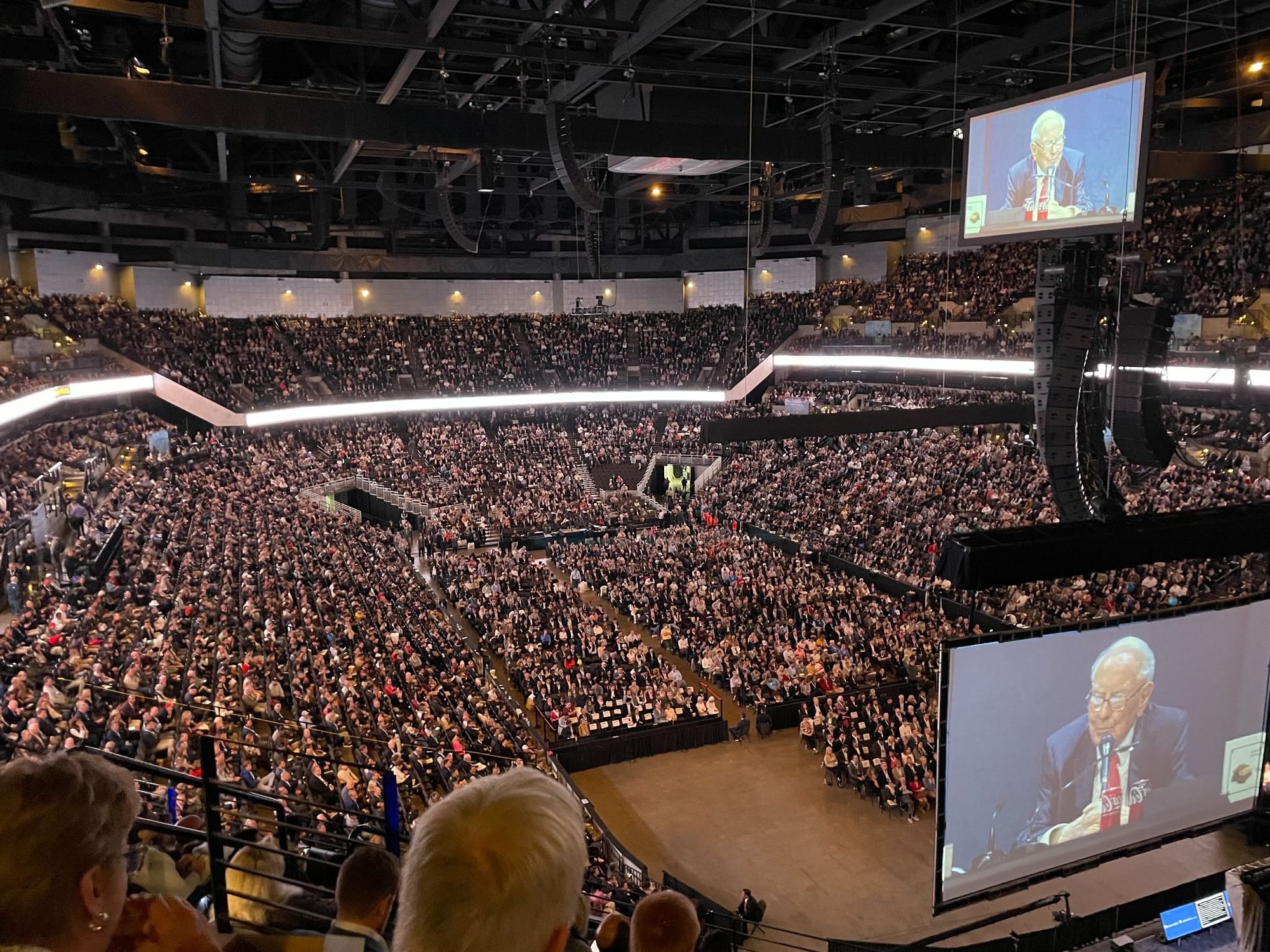
Eventually, 40,000 tribesmen (and -women) would make the pilgrimage to Omaha for Berkshire Hathaway’s annual shareholders’ meeting – nicknamed “Woodstock for Capitalists” because it was more like 99% supersized extravaganza and 1% “meeting.”
(Supersized, but also genteel: I was in the CHI Center bathroom and didn’t realize how long I’d been playing on my phone. A small wad of paper towel floated gently over the stall door: The waiting tribe had conferred, and decided this was the most polite way to get my attention.)
The tribe has ballers – one literal. Warren’s friend Jay Z contributed a song played at the intro. Arnold Schwarzenegger, LeBron James, Alan Greenspan, Jamie Lee Curtis and Floyd Mayweather have all volunteered their time for the annual meeting-kick-off videos, which were usually spoofs of some sort.
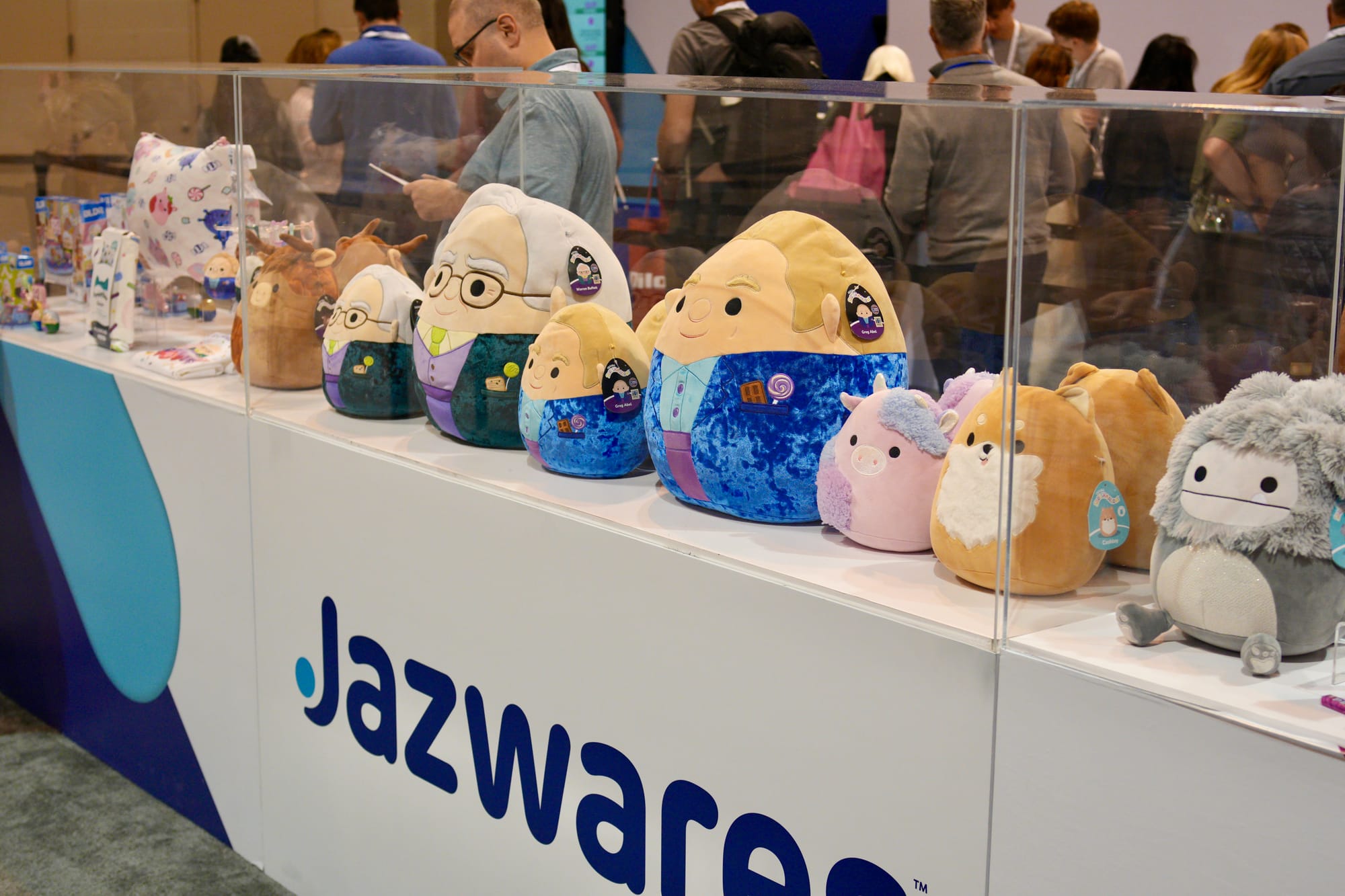
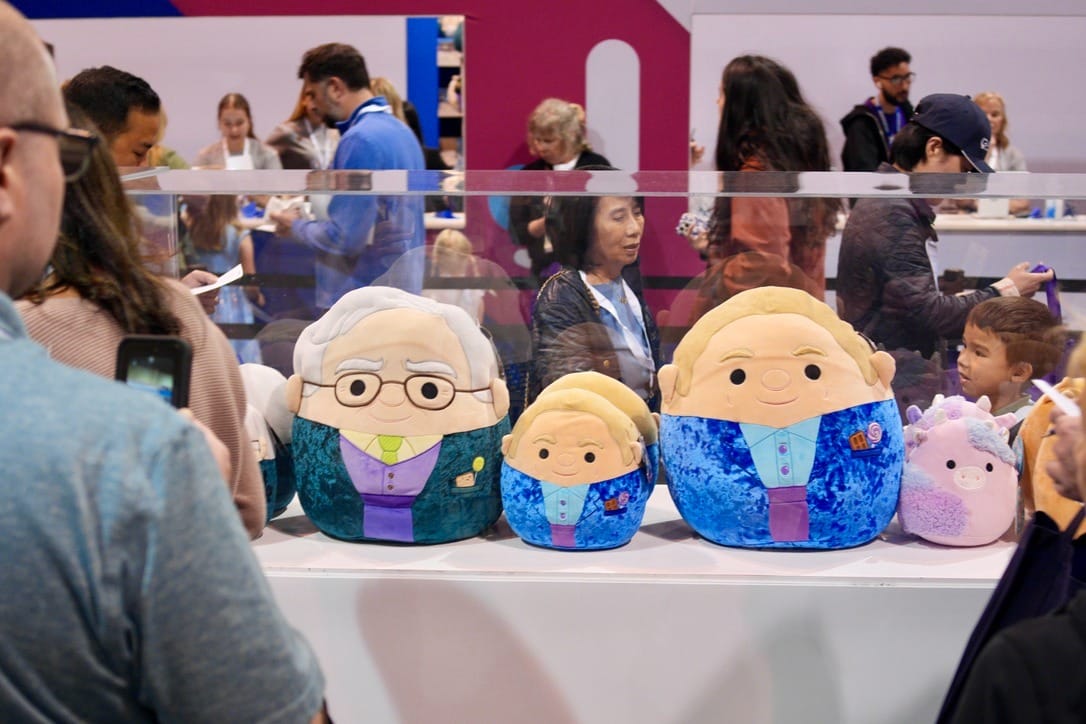
Among the wares peddled by Berkshire-owned companies in the adjacent exhibit hall include Buffett and Munger Squishmallows, boxers, shirts, candy, underpants, luggage tags, and rubber ducks – at least those are some things I’ve bought.
So what’s the semi-irony?
The irrational love of rationality. While Berkshire certainly leaned in to the annual meeting as the tribe grew – the supersized meeting is high cost, both financially and in management’s time and mental energy – Buffett himself isn’t tribal. He’s rational to the point it’s a character flaw.
Buffett dislikes ESG (environmental, social, and governance) investing: He feels investing is about rational economics; that investing and ideology don’t mix.
His followers have recursively built enough fandom around this way of doing things that it borders on irrationality. (Criticism of Buffett and Munger is all but off limits in true-fan circles.)
Many Berkshire shareholders promise to never sell. They love that Berkshire stands for responsible corporate stewardship in an era in which hype and puffery seem to be winning. They bring their family or friends to the meeting. They commune at the side events. They buy Squishmallows. (I’ve done all of these.)
Berkshire Hathaway shareholders are like passionate sports fans – of a stock.
On one hand, the Berkshire meeting frenzy is a fun and wonderful thing – I look forward to it every year. And beyond the meeting, Berkshire’s success has inspired several generations of investors (and companies) who, in the Buffett mold, focus on fundamentals like moat and competitive advantage, which is healthy for markets.
On the other hand, would Berkshire shareholders want Buffett to become a fanboy of the businesses he owns? To promise never to sell?
A gentleman named Tom Gayner knows.
I’ll talk about that next week.